Common Bite Issues You Can Spot at Home
Smiles Change Over Time
As children grow, their teeth and jaws are constantly changing. While no child’s smile develops overnight, many parents in Singapore are surprised to learn that certain orthodontic issues are much easier to manage when noticed early.
However, bite alignment isn't just a "kids' issue." It is important to remember that teenagers and adults often share many of these same bite features. Whether you are looking at your child’s developing smile or noticing shifts in your own teeth as an adult, the principles of a healthy bite remain the same.
The American Association of Orthodontists (AAO) recommends that every child receives their first orthodontic screening by age 7. By this age, the "6-year-old molars" have usually erupted, establishing the back bite and allowing a specialist to evaluate the front-to-back and side-to-side tooth relationships.
What Do Bite Problems Look Like?
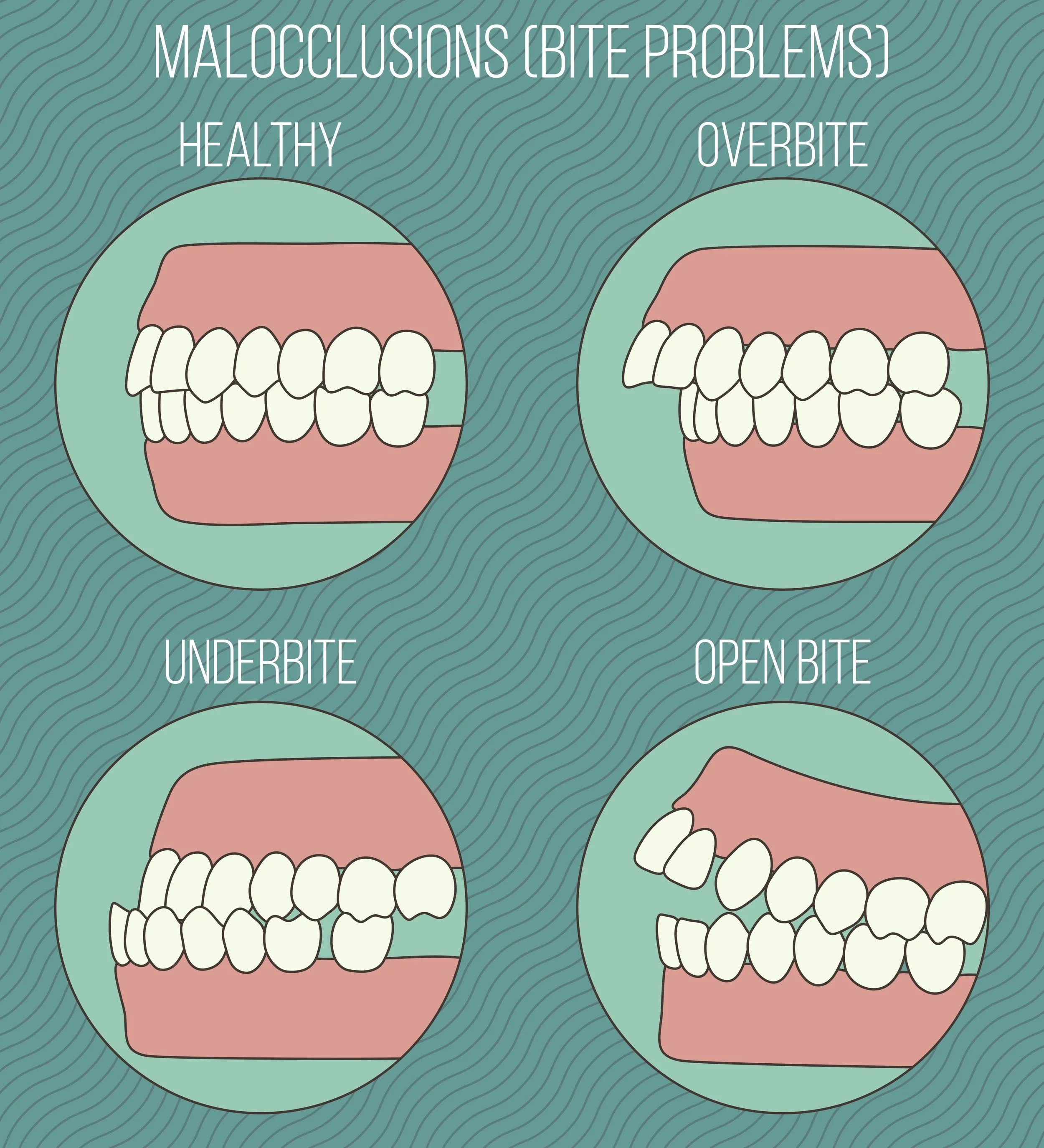
To help you identify potential issues at home, here are the common bite features highlighted our
Quick Guide to Bite Issues. These symptoms are relevant for all ages:
1. Front-to-Back Alignment
Underbite: The lower front teeth sit in front of the upper teeth (a "reverse bite").
Front Teeth Sticking Out: The upper teeth protrude significantly.
Deep Overbite: The upper front teeth cover an excessive amount of the lower teeth when biting down.
2. Bite Issues Vertically and Side-to-Side
Open Bite: A visible gap remains between the upper and lower teeth even when the back teeth are biting together.
Crossbite or Scissor Bite: The teeth don't meet correctly at the sides, which can lead to jaw shifting, facial asymmetry, or uneven tooth wear over time.
3. Growth and Eruption Problems
Crowded Teeth: There isn't enough space in the jaw for teeth to fit straight.
Eruption Problems: You might notice a tooth being blocked or delayed.
Jaw Proportion: A small lower jaw or a long lower jaw affects the facial profile.
These features do not always cause pain or immediate problems, which is why they can be overlooked in the early years.
What Early Detection Really Means
Noticing these signs early does not mean your child will need braces straight away. In many cases, early orthodontic care involves monitoring growth, offering reassurance, or planning treatment at the most appropriate time.
Because children’s jaws are still developing, gentle guidance during growth can often make future treatment simpler, shorter, and more predictable.
For teenagers and adults, the goal shifts toward correction and maintenance. Because adult bone is harder, treatment may take slightly longer, but you are never too old for braces or clear aligners e.g. Invisalign.
What Do Bite Problems Look Like?
To help you spot bite problems at home, you can refer to my Quick Guide to Bite Issues — an easy-to-follow visual guide with clear photos of different bite types.
This guide is intended as a simple visual check, not a tool for self-diagnosis. If something doesn’t look quite right—whether you are looking at your 7-year-old or yourself in the mirror— a professional orthodontic assessment in Singapore offers peace of mind.
👉 [Download the Visual Guide] to see clear photos of these bite types.
If you spot any of these signs, book a screening to see if early interceptive treatment could save time and costs in the future.
